
Blog
Turkish Evil Eye (Nazar Boncuğu): Meaning, History and How to Use It

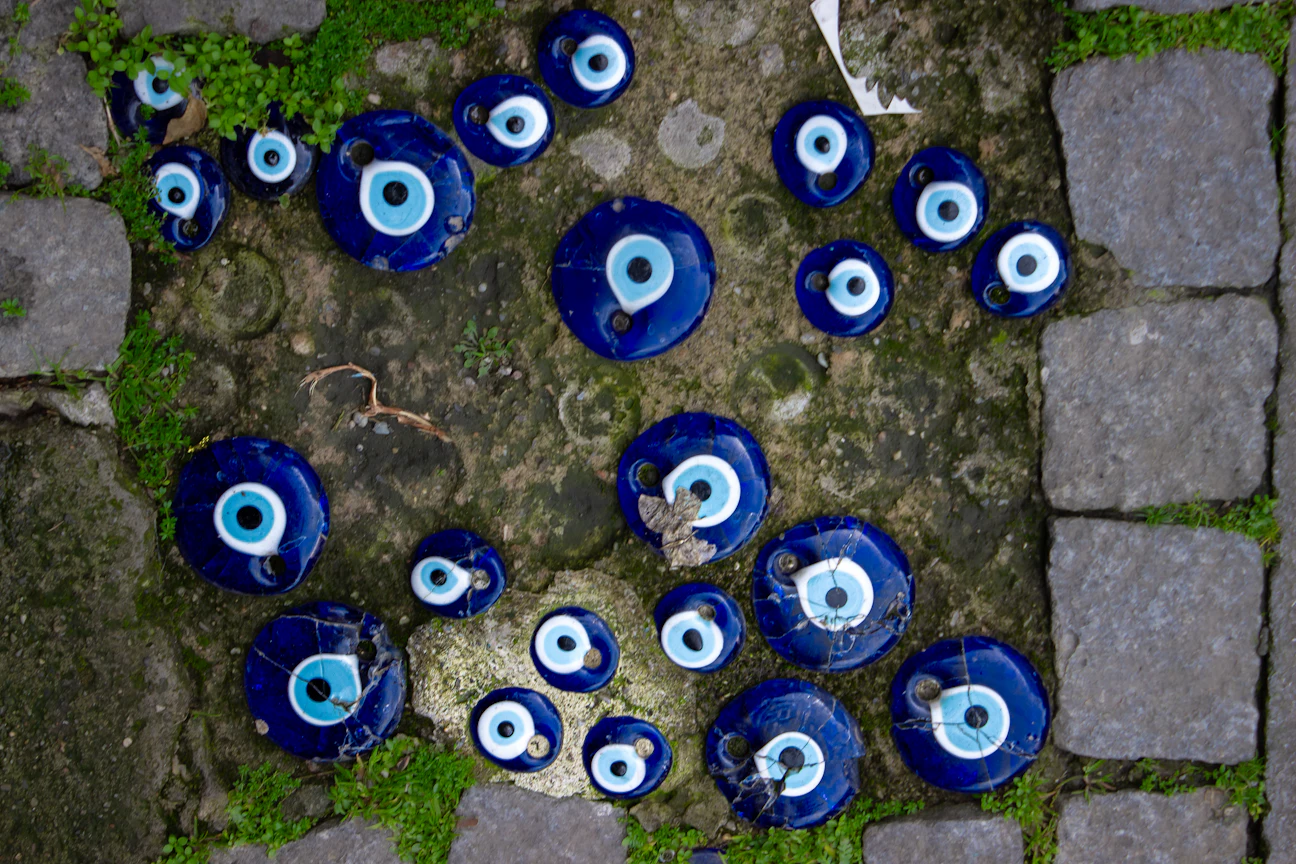
The Turkish evil eye, or nazar boncuğu, is a blue glass bead shaped like an eye. In Turkey it is traditionally believed to protect people, homes and belongings from nazar: harm thought to come from an envious or admiring gaze. You will see it pinned on babies, hung by front doors, dangling from mirrors and worn as jewelry. Today it is as much a beloved cultural symbol and gift as it is a charm.
Walk through any Turkish bazaar and one color follows you everywhere: a deep, glossy blue, staring back at you from walls, doorways, keychains and necklaces. That is the nazar boncuğu, the Turkish evil eye bead. This guide explains what the symbol means, where it comes from, how the glass beads are still made by hand near İzmir, and how people in Turkey actually use them, so you can choose and give one with confidence.
What “nazar” means
The word nazar comes from Arabic and relates to looking or sight. Boncuk is simply the Turkish word for bead. Put together, nazar boncuğu literally means “eye bead” or “gaze bead”. In everyday Turkish, nazar also names the thing the bead protects against: the idea that a jealous or even an overly admiring look can bring bad luck, illness or misfortune to a person, an animal or an object.
The logic is simple and a little poetic: if harm comes from an eye, you answer it with an eye. The blue bead “looks” straight back at whoever is staring. That is also why a cracked nazar is traditionally read as good news: it is said to have done its job.
An eye for an eye
The bead is shaped like an eye so it can return the gaze that is believed to cause harm.
Protection, not luck
Strictly speaking a nazar wards off misfortune; the “good luck” meaning is a modern, friendlier reading.
Shared across cultures
Eye charms appear from Greece to Iran and India; the glass nazar is the form most closely tied to Turkey.
Broken means it worked
A nazar that cracks is usually replaced with a thank-you rather than a worry.
Anatomy of the bead: shape and colors
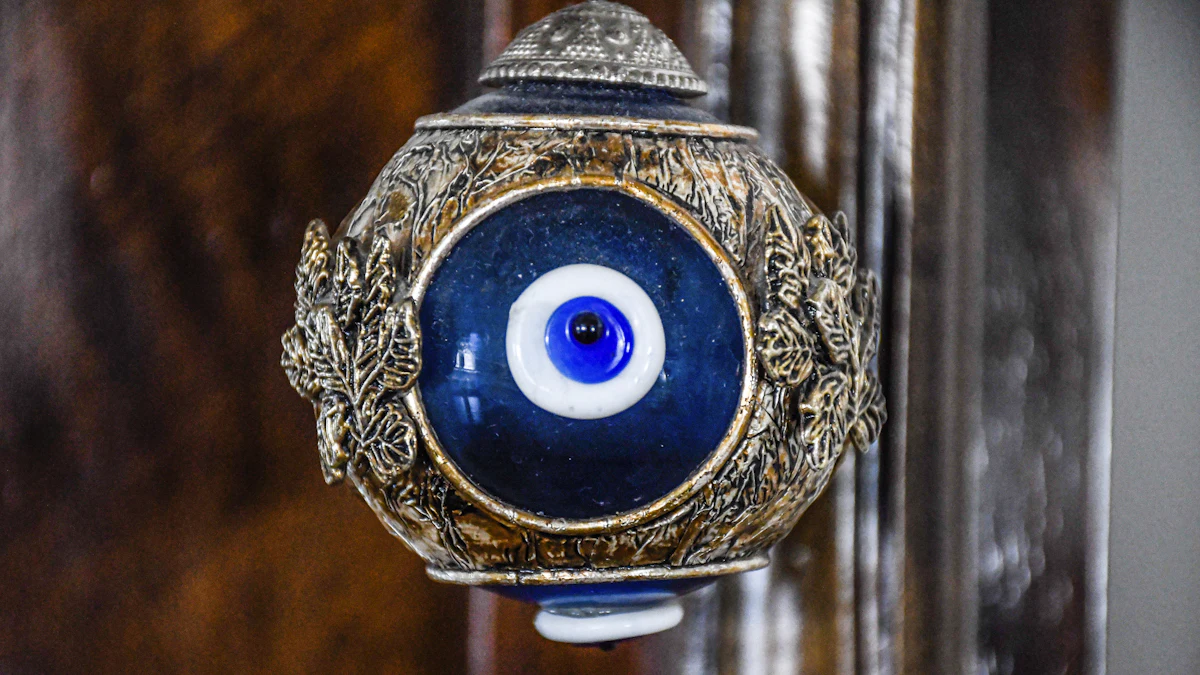
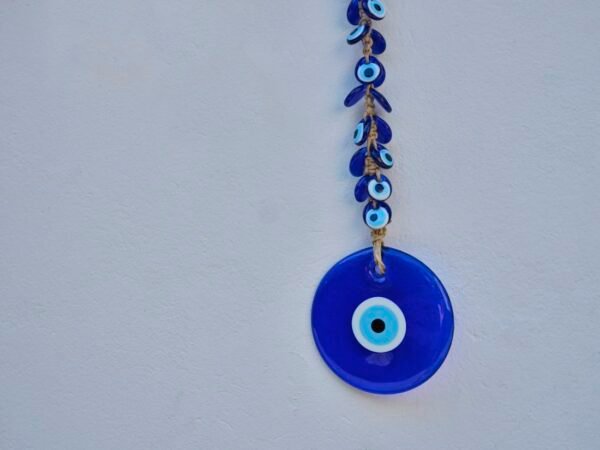
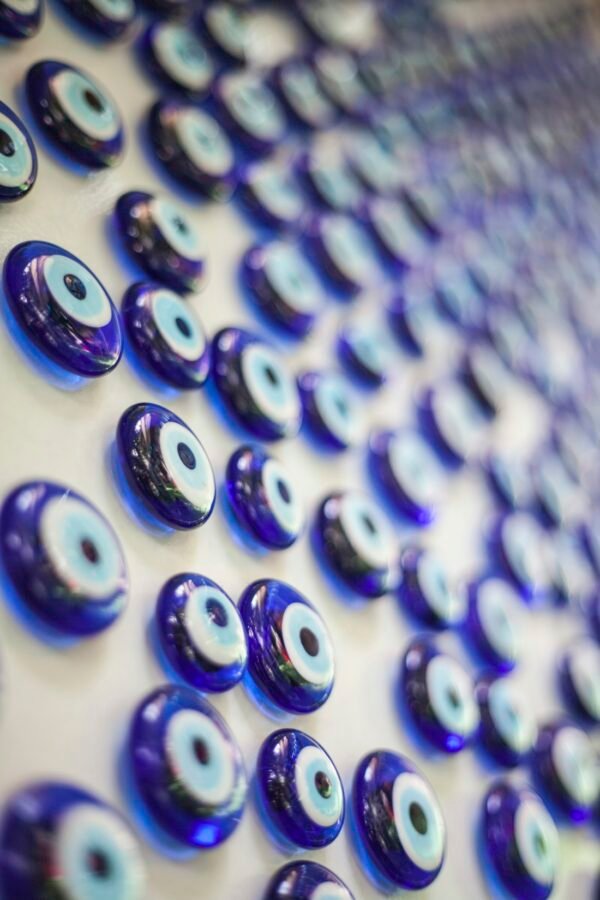
A classic nazar is a flat or slightly domed disc of handmade glass with concentric circles: a dark cobalt-blue outer ring, a white ring, a lighter blue ring and a black or dark-blue dot in the center. Some beads add a thin yellow or gold edge. Teardrop and round-bead versions are common too, and you will find everything from a tiny bead on a safety pin to a wall plate the size of a dinner dish.
Why blue? Blue glass was historically the signature color of the bead, and in Anatolia blue has long been associated with protection and the sky. Makers now also produce green, turquoise and multicolored sets, but the cobalt-blue eye remains the classic.
A short history
The belief in a harmful gaze is far older than Turkey itself. Evil-eye amulets are generally dated back several thousand years across the eastern Mediterranean and the Middle East, and the spread of glass bead production around the Mediterranean in the second millennium BCE helped make eye beads popular among several ancient peoples. The idea travelled with traders, sailors and empires, which is why versions of it survive today in Greece, the Balkans, the Levant, Iran, Central Asia and South Asia.
In Anatolia, glassworking is documented from the Seljuk period onward, and after the conquest of Istanbul the city became an important center of glass production. According to İzmir’s Provincial Directorate of Culture and Tourism, bead glasswork in the İzmir region was introduced by craftsmen who came from Egypt and worked at the Arap Han in the Kemeraltı bazaar; local masters learned the craft and adapted bead designs to their own needs. Once colored glass was available, an eye was set into the bead to protect against nazar, and the form we know today took shape.
A village named after the bead. Kurudere, a village in İzmir’s Kemalpaşa district, was officially renamed Nazarköy (“Nazar Village”) in 2007 because evil-eye bead making was so central to its life. Together with Görece in the Menderes district, it is one of the places where the beads are still produced with traditional methods.
How nazar beads are made
Authentic nazar beads are still made in small, wood-fired furnaces by master glassmakers, with a method that has changed little over the generations. No two handmade beads are exactly alike.
The furnace is fired with pine
Round or oval bead kilns are built by the craftsmen themselves. They have shelves, called “pans”, on which only pine wood is burned.
Colored glass is melted
Glass in different colors, with blue leading, is melted on the pans until it is soft enough to work.
The bead is gathered on an iron rod
The master pulls molten glass from the kiln with an iron rod and shapes the base of the bead on a length of rail iron.
The eye is built up in layers
Drops of white, light blue and dark glass are added one over the other and flattened to form the concentric rings of the eye.
Cooled, sorted and strung
Finished beads are sorted by size and style, from tiny charms to large wall plates, and threaded on cords or set into jewelry.
Traditional makers in İzmir name their beads by shape: “plate” (the flat disc that has become the symbol of İzmir), walnut, cylinder, egg, dice and others. If a bead feels light, perfectly uniform and has printed rather than layered rings, it is most likely molded plastic or machine-made glass rather than a furnace-made nazar.
How people use it in Turkey
The nazar is woven into everyday life. Visitors notice it first in taxis, swinging from the rearview mirror, and in restaurants and shops, where a large glass eye hangs near the entrance. At home it is often the first thing a family hangs after moving in, and a small nazar pin is a traditional gift for a newborn.
There is also a spoken side to the tradition. When someone compliments a child, a new car or a beautiful garden, Turks often add maşallah, an expression of appreciation that is also meant to keep the compliment from turning into nazar. The bead and the word work together: one for the eyes, one for the tongue.
- By the front door or in the hallway, facing people as they enter: the most traditional spot for a wall hanging.
- In the car, from the mirror or on the keychain.
- On a baby or child, as a tiny safety-pin bead on clothing (kept out of reach of small hands).
- Worn as jewelry: bracelets, necklaces and earrings are now the most common way younger people carry one.
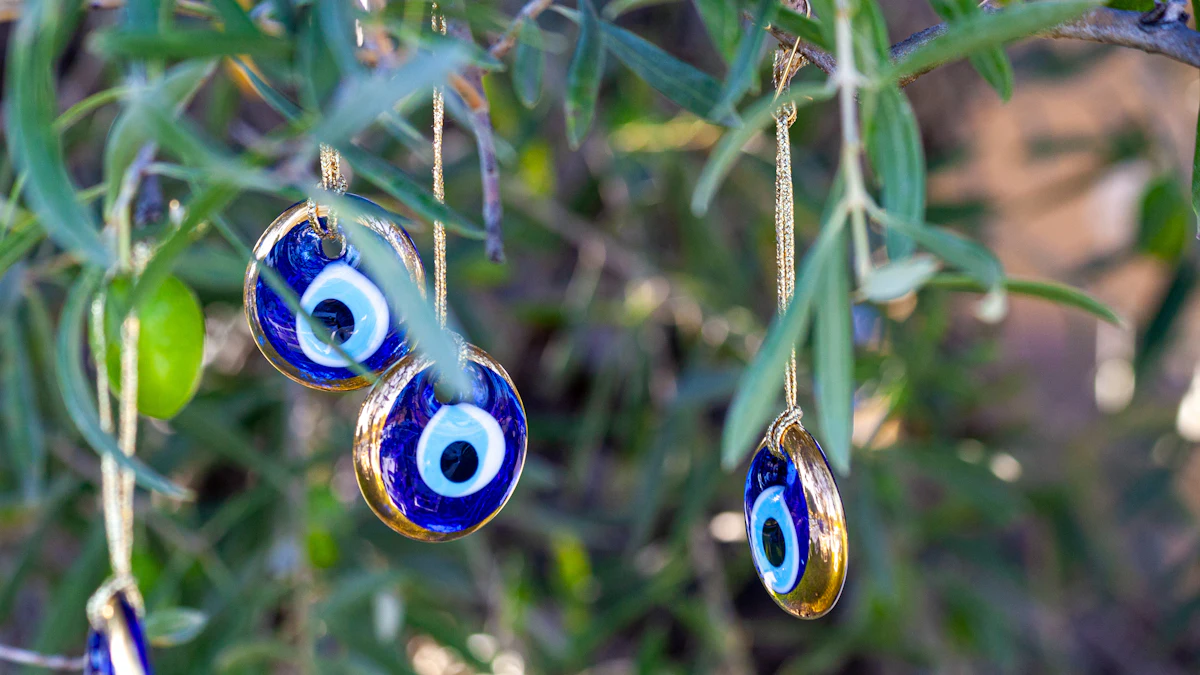
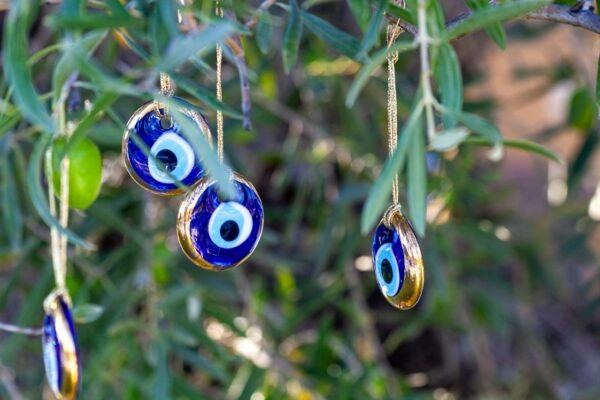
- On trees and plants: small charms are tied to branches, a sight made famous by the “nazar trees” of Cappadocia.
Nazar vs. hamsa vs. other eye charms
The nazar is often sold alongside the hamsa, a hand-shaped amulet whose name means “five” for the five fingers. The two are frequently combined, with a small eye set in the palm of the hand. They are related in purpose but come from different visual traditions, and both are used by many people today purely as decoration. Here is how the most common charms compare.
| Charm | What it looks like | Where it is most associated | Typical use |
|---|---|---|---|
| Nazar boncuğu | Blue glass eye with concentric rings | Turkey; also Greece, Iran, Azerbaijan and beyond | Wall hangings, pins for babies, car charms, jewelry |
| Hamsa (Hand of Fatima / Hand of Mary) | Open palm, often with an eye in the center | North Africa, the Middle East, the Levant | Wall plaques, pendants, door hangings |
| Mati (Greek eye) | Blue eye, usually a flat bead or enamel | Greece and Cyprus | Bracelets, keychains, home decor |
| Modern “evil eye” jewelry | Stylized eye in enamel, gold tone or crystals | Global fashion | Necklaces, rings, phone cases |
Choosing and gifting a nazar
Can you buy a nazar for yourself? Yes. You will sometimes hear that an evil eye should be received as a gift, and gifting is certainly the most common way one arrives, but in Turkey people happily buy them for their own homes, cars and babies. If you are giving one, pair it with a short note explaining the meaning; it turns a small object into a story.
Match the form to the recipient. A large glass wall hanging suits a housewarming or a new office. A bracelet or necklace is an easy everyday gift for a friend. A set of small charms is lovely for someone with a garden, a balcony or a Christmas tree, and a bead pin is the classic present for a new baby. For more Turkish gift ideas across budgets, see our guide to authentic gifts from Istanbul; if you are decorating a room, a nazar pairs beautifully with the warm glow of a Turkish mosaic lamp.
Care is simple: hang wall pieces on a secure hook, keep outdoor charms where they will not knock against hard surfaces, and wipe with a soft dry cloth. If one breaks, follow the tradition: say thank you and hang a new one.
Shop the guide
Handmade glass nazars from Istanbul
Every piece is packed by hand in Istanbul and shipped worldwide with tracking. Browse the full evil eye collection.
FAQ
What does the Turkish evil eye mean?
The nazar boncuğu is a blue glass eye bead traditionally believed to protect against nazar, the harm thought to come from an envious or admiring gaze. Today it is also a widely loved symbol of Turkish culture and a popular gift.
Is it bad luck to buy an evil eye for yourself?
No. Gifting is the most common way a nazar changes hands, but people in Turkey routinely buy them for their own homes, cars and children. Buying one for yourself is perfectly normal.
What happens if my evil eye breaks?
Tradition says a broken nazar has absorbed the harm aimed at you and done its job. The usual response is to be glad, dispose of the pieces safely and hang a new one.
Why is the evil eye blue?
Blue glass was the traditional material of the bead, and blue has long been associated with protection and the sky in Anatolia. Other colors exist, but the deep cobalt-blue eye is the classic Turkish form.
Where should I hang a nazar at home?
The most traditional spot is near the front door, facing people as they come in. Living rooms, nurseries, balconies and offices are all common too.
- Nazar boncuğu means “eye bead”; it is believed to turn back a harmful gaze.
- The classic form is a cobalt-blue glass disc with white, light-blue and dark rings.
- Beads are still hand-made in pine-fired furnaces around İzmir, in Görece and Nazarköy.
- Hang it by the door, wear it, pin it on a baby or tie it to a tree; buying one for yourself is fine.
- If it breaks, tradition says it worked: replace it with a thank-you.


